CLICK ME
“I want to learn useful skills in my free time... but I don't want it to feel like another commitment that I have to see through.”

TL;DR
Trailhead
My role:
Project timeline:
Scope:
Platform:
UI/UX Designer
100 hours
End-to-End App
Mobile MVP
Tools:
Figma, FigJam, Miro, PS
Key methods:
User Interviews, Affinity Map, Persona, Wireframes, Usability Test, Prototype
Trailhead was born from a specific friction point: the gap between rigid, formal courses and shallow, "one-track" casual learning apps. While existing tools offer either too much pressure or too little depth, adults pursuing self-directed growth require a third way—a flexible framework for comprehensive understanding.
Through competitive analysis and user interviews, I identified the "Self-Directed Paradox": learners crave enough structure to eliminate the mental load of planning, but enough autonomy to keep the experience low-pressure.
I designed Trailhead to transform high-quality, disparate resources into guided learning flows with features:
- Topic Discovery: Reducing the barrier to entry for complex subjects.
- Navigable Resource Ecosystems: Prioritizing variety over linear constraints.
- Adaptive Hierarchy: Using sub-topic tagging and recommended flows to provide a roadmap without the rigidity of a syllabus.
The final prototype validates a sustainable model for adult education—one that balances professional-grade guidance with the freedom of casual exploration.
Bringing Trailhead to Life
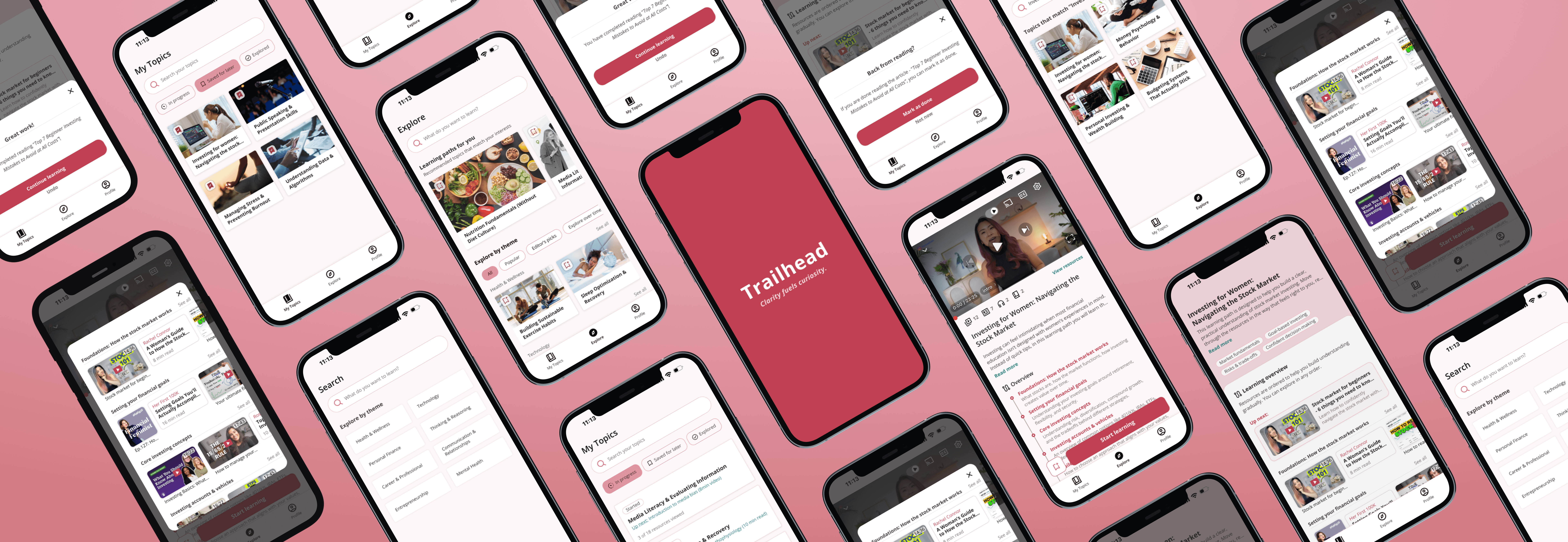
I built a fully interactive prototype in Figma that demonstrates Trailhead’s end-to-end experience. and communicates its value as a learning companion rather than a course platform. By balancing guidance with autonomy, Trailhead supports intentional, sustainable learning, helping users show up for learning without turning it into another obligation.
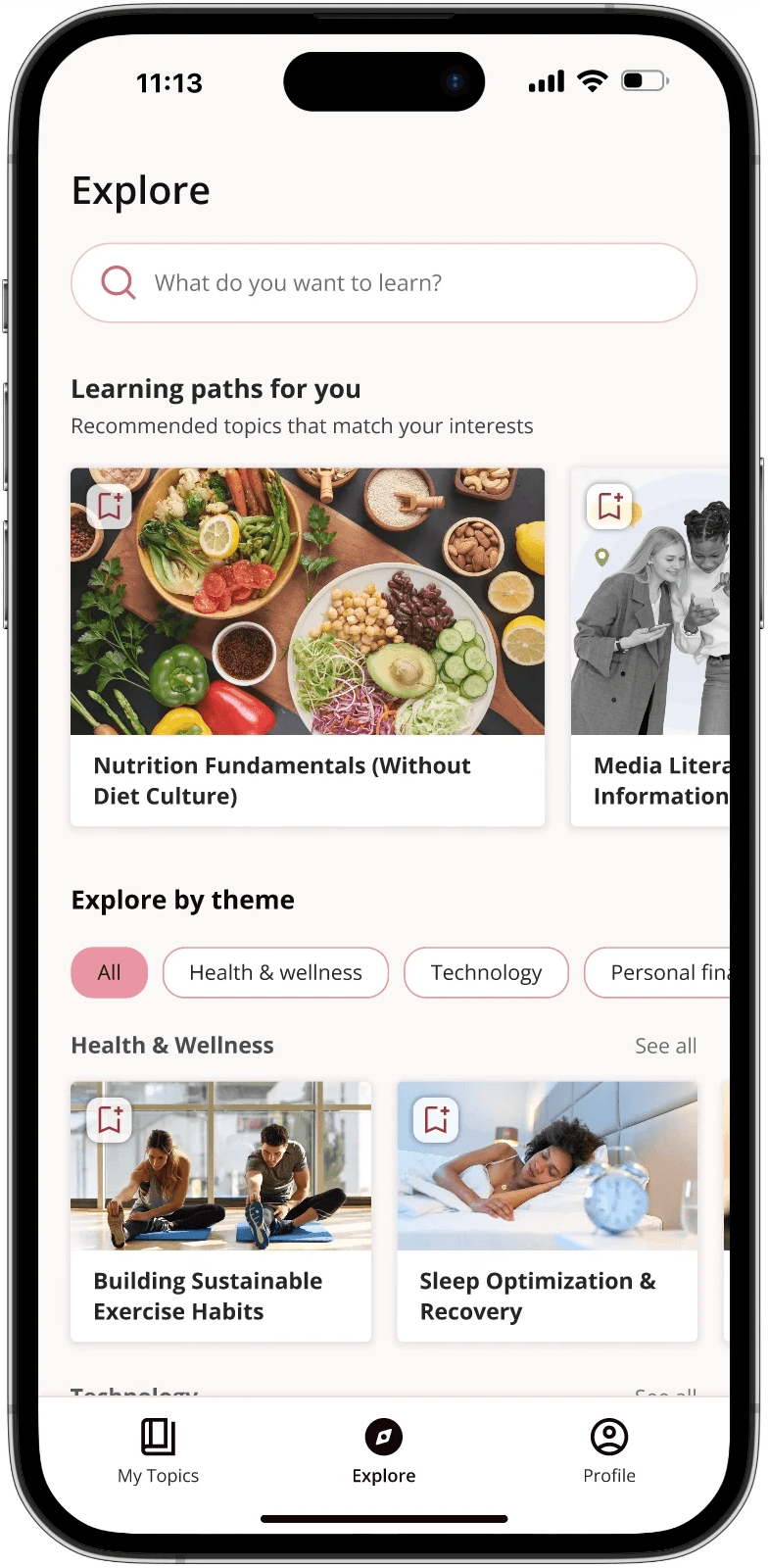
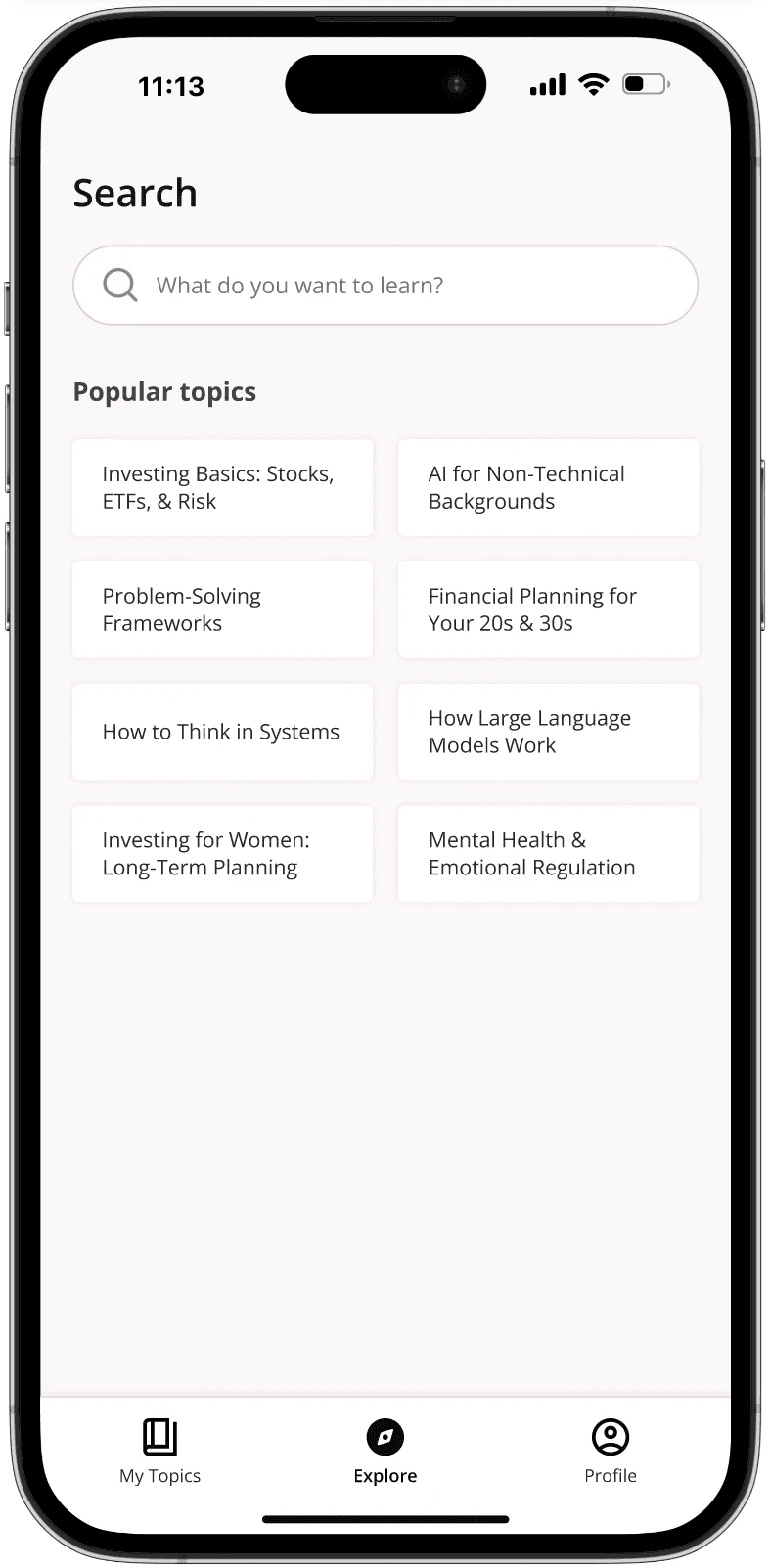
Explore & save without commitment
Browse popular and curated topics without pressure or commitment.
We've separated interest from action, so you can follow curiosity in the moment and return when you're ready to learn by quickly saving interesting topics .


All your topics in one place
“My Topics” is your lightweight personal learning hub, with a clear sense of continuity without enforcing schedules or deadlines. With saved and in-progress topics in one place, you can easily re-enter learning and make progress over time without guilt or pressure.
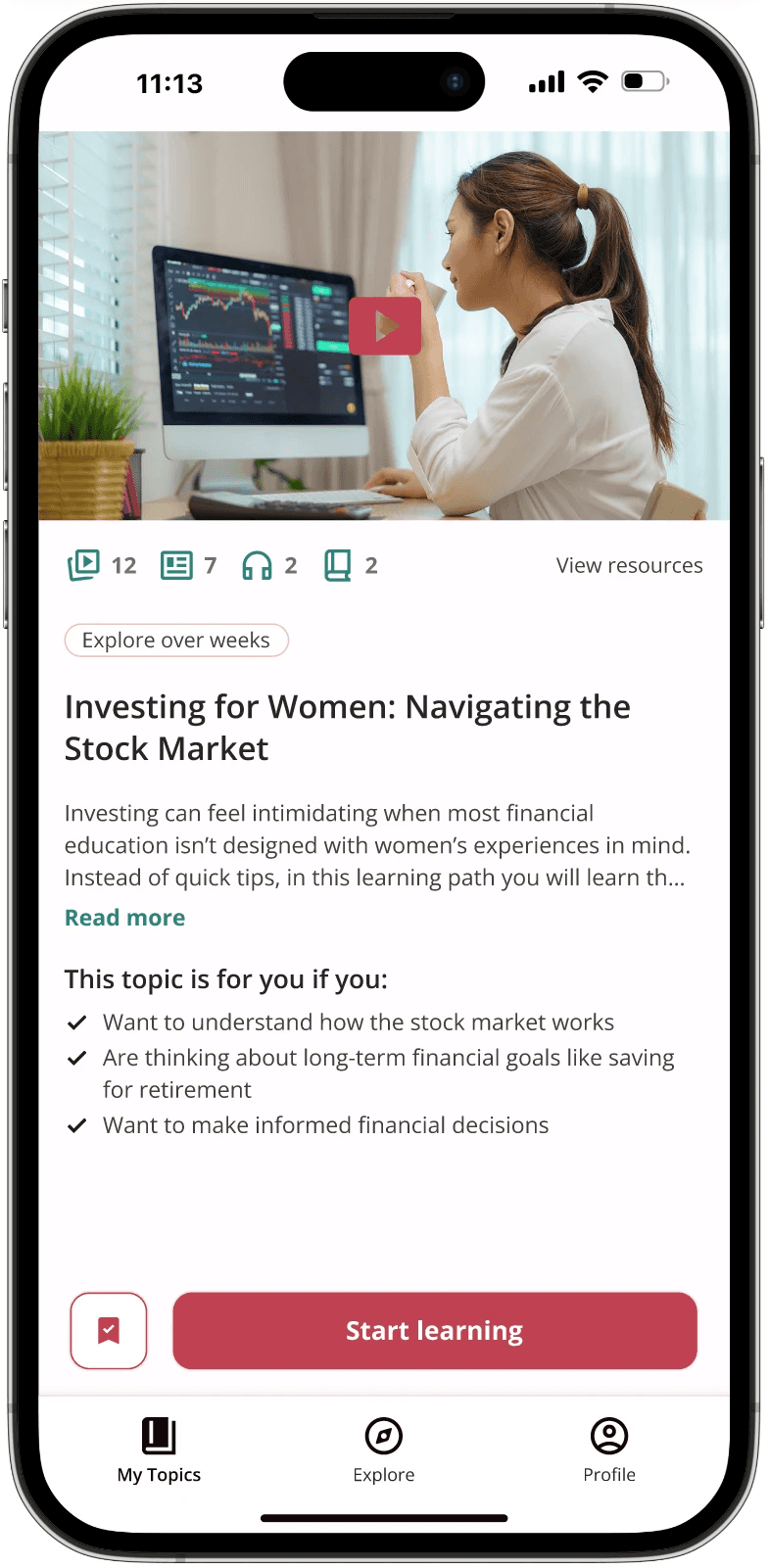
Deep dive into what you like
We'll do the planning for you so you can focus on learning with all your resources organized by sub-topic and recommended sequence.
Transition seamlessly between external content on the in-app browser and Trailhead, with smart prompts to mark items as completed as you go.

Identifying a Gap in How Adults Learn
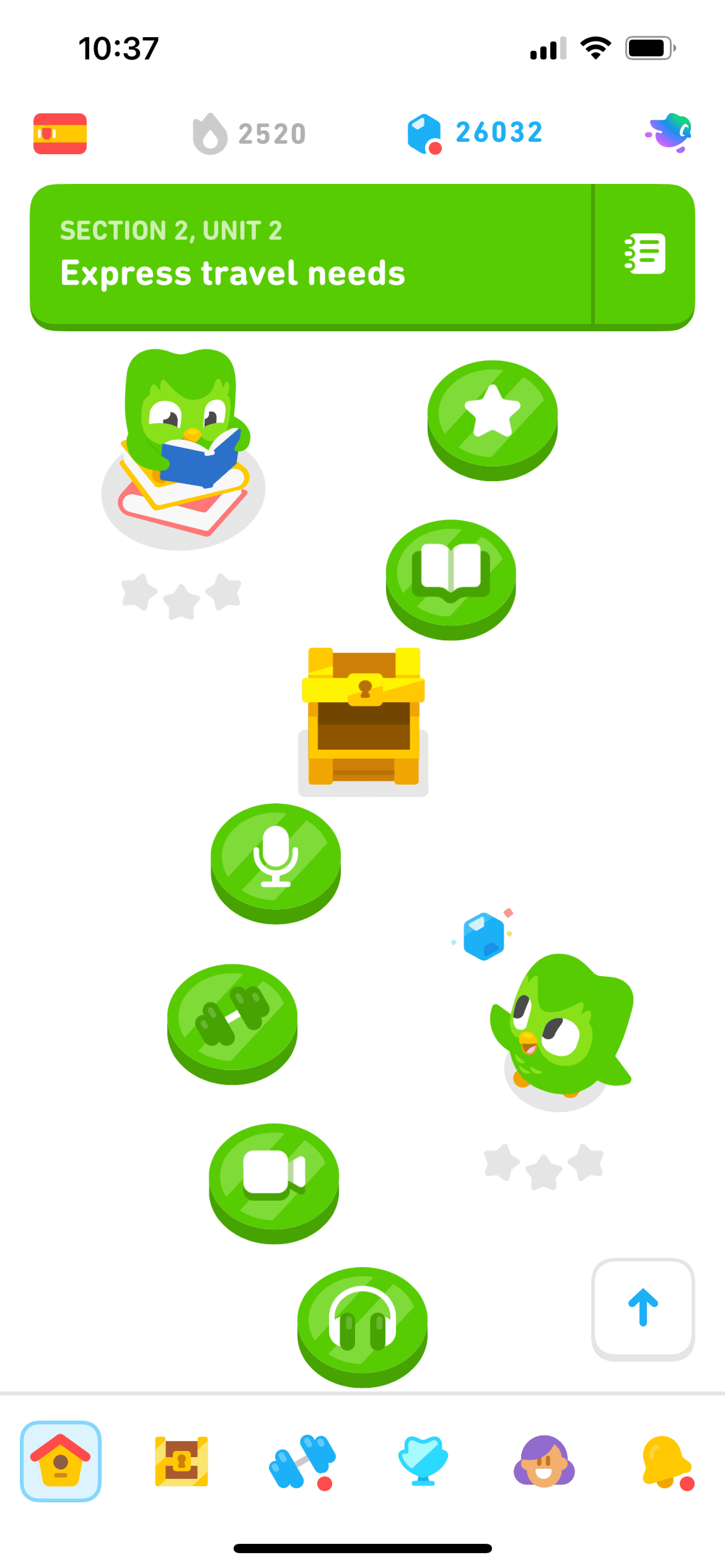
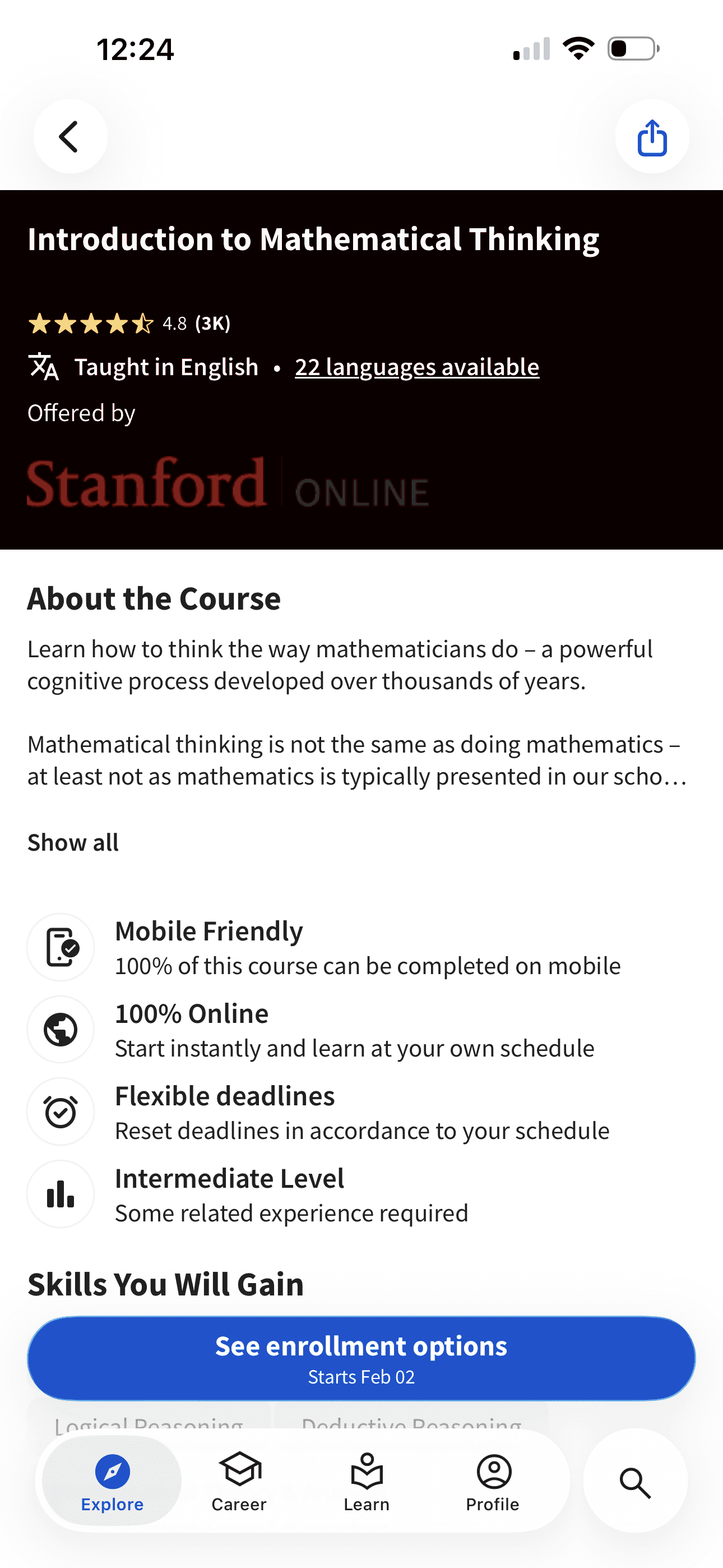
I began this project by examining how adults currently approach self-directed learning outside of formal education. I looked at popular learning apps and course platforms to understand how they support commitment and progression. What stood out was a clear gap: casual apps made it easy to start with surface-level resources but rarely supported meaningful depth, while course platforms offered depth at the cost of rigid structure and high upfront commitment.
I realized that many adults fall somewhere in between - wanting to learn seriously, but not necessarily enrolling in a course. As I reflected on early research and my own experiences, I started with a simple hypothesis:




Hypothesis
Adults learning for personal enrichment need an ecosystem of resources for comprehensive understanding, within a structured framework because the planning effort is too high
Structure, clear path, bite-sized tasks
Higher the required effort, more likely the skill is to get dropped
Flexibility within framework to avoid restriction
video instructions and options
Having to plan, research, create syllabus, figure out every step = mental load

I want to learn, but I don't want another item on the to-do list

Tell me what to do, give me directions
I love structure, but sometimes it makes me want to give up
Not knowing where to look for tutorials is de-motivating
Grounding the Idea in User Research
To validate this hypothesis and understand how adults learn, I conducted five structured interviews with participants who actively learn in their free time. I explored their motivations and frustrations.
Across interviews, I heard consistent patterns: participants described starting enthusiastically, then slowly dropping off once they felt unsure about next steps, while relying heavily on external resources like YouTube, blogs, and books. These insights reinforced the idea that learners need guidance to keep going.
I synthesized my research findings using affinity mapping and uncovered a strong pattern: users valued structure but when casual learning felt too rigid or overwhelming, they opted out entirely. Learners defaulted to planning their own frameworks - researching resources, deciding credibility, and figuring out steps. This planning effort introduced friction before learning even began.
I identified this moment of ‘deciding what to do next’ as a critical breakdown point to address.
Key Insight
When self-learning, users need clear structure and progression to eliminate the friction of planning. However, users do not want to feel restricted by an inflexible framework.
From these key insights, I developed a user persona and defined the problem statement.

Persona: The Intentional Explorer
“I want to learn useful skills in my free time… but I don’t want it to feel like another commitment that I have to see through.”
Lisa
I am a 25 year-old professional who wants to spend her time more intentionally. I enjoy learning in my free time, but big commitments feel intimidating and turn casual learning into another chore.
I aim to
Use free time meaningfully
Explore relevant & useful skills
Learn flexibly and comprehensively
Step away without guilt
I'm motivated by
Personal growth
Feeling competent and informed
Curiosity sparked by practical & social relevance
I need
Low-barrier ways to try & learn new topics
Clear structure
Choice without restriction
Varied high-quality materials
I'm frustrated by
Upfront commitment
Overly gamified and shallow apps
Burden of planning every next step
Guilt stepping away before finishing
Problem Statement
Lisa - a curious, self-directed learner - needs a flexible and guided way to explore new topics because the mental effort of planning her own learning path creates cognitive overload and leads to drop-off.
Designing Trailhead
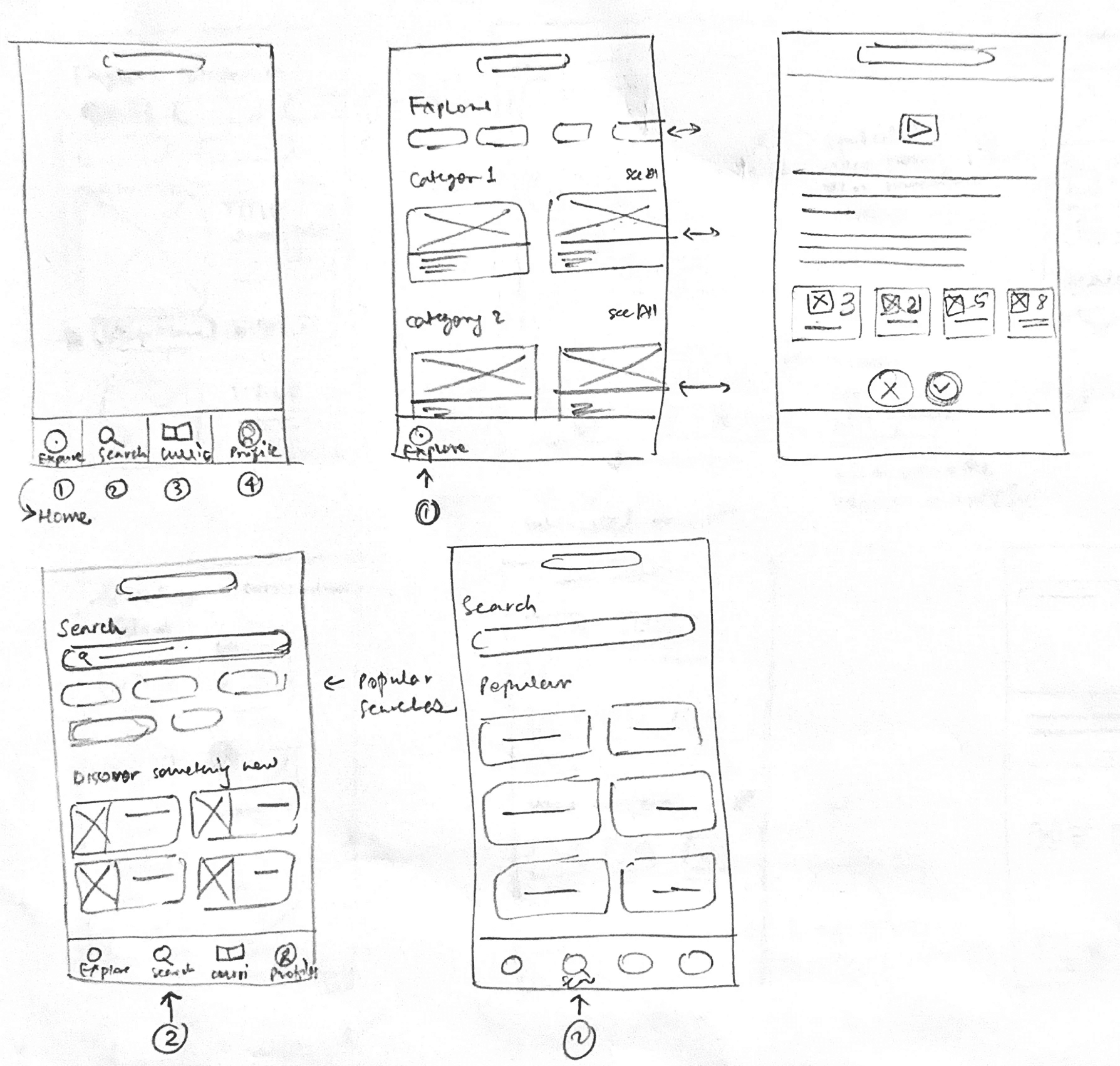
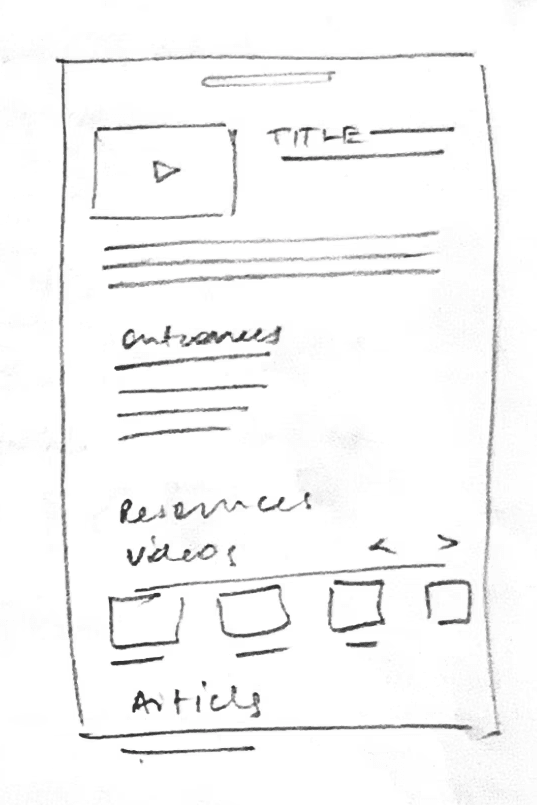
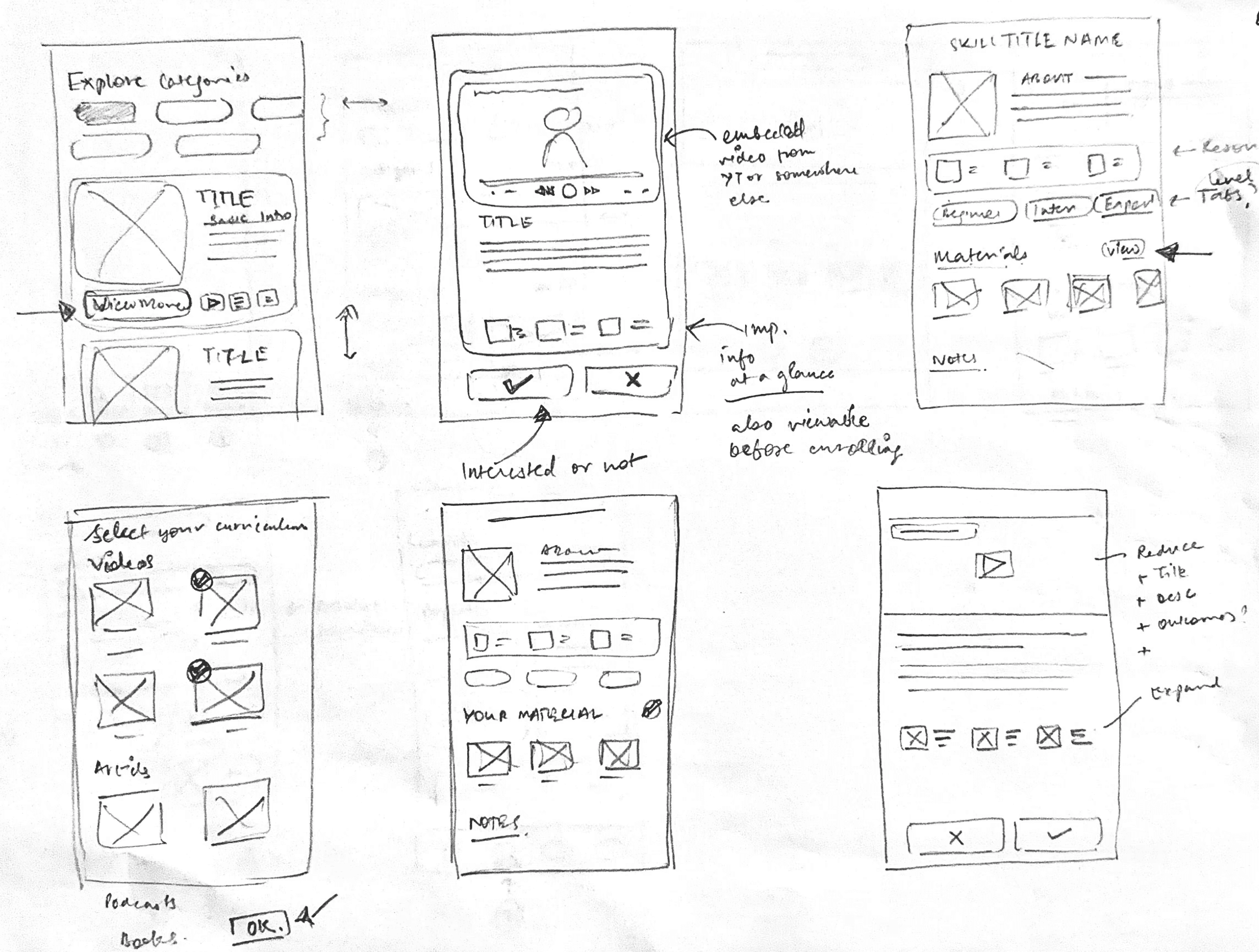
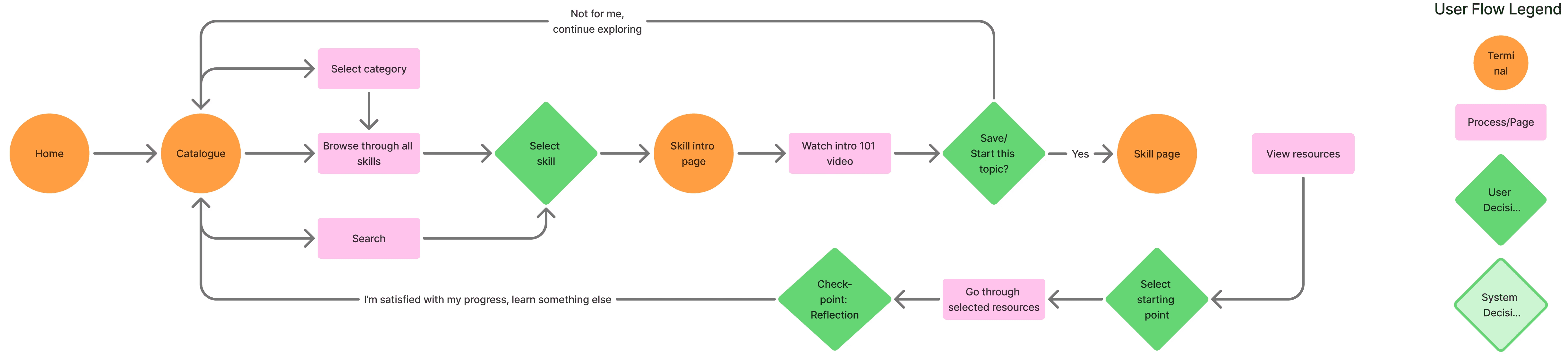
I began brainstorming and sketching ideas for a structured yet flexible learning interface, addressing key insights. I designed core flows around discovery, saving & starting topics, and progressing through resources. A key decision was separating the decision phase (exploring topics) from the learning phase (engaging deeply) to allow free exploration before commitment.
Product direction
Trailhead's intent is to provide structure without pressure: helping users begin learning quickly, understand what comes next, and feel confident stepping away or returning at any time. It organizes high-quality existing resources into guided learning flows instead of creating new content. This positioning helps differentiate Trailhead from both casual apps and formal courses.
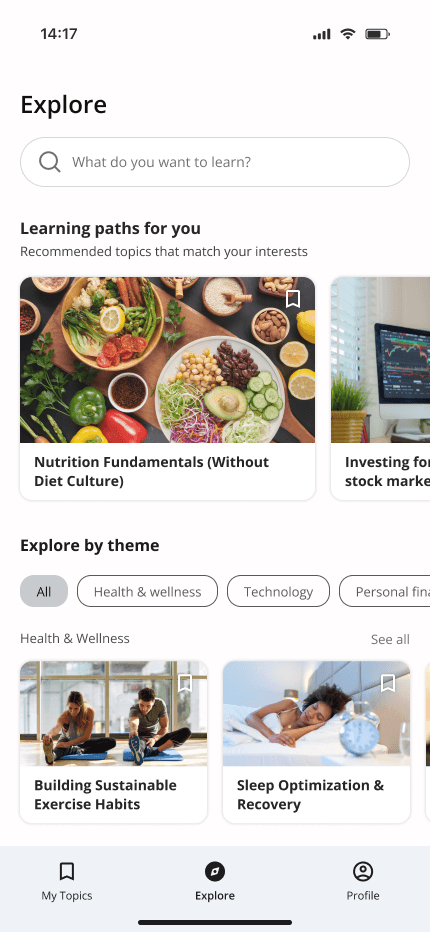
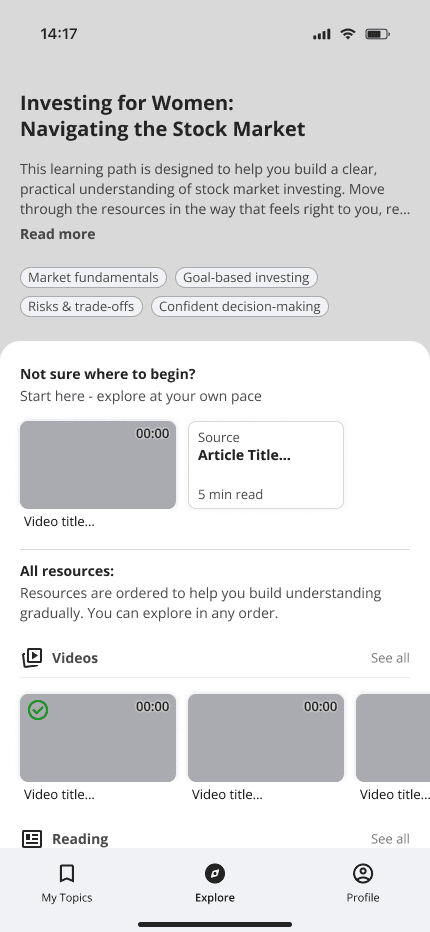
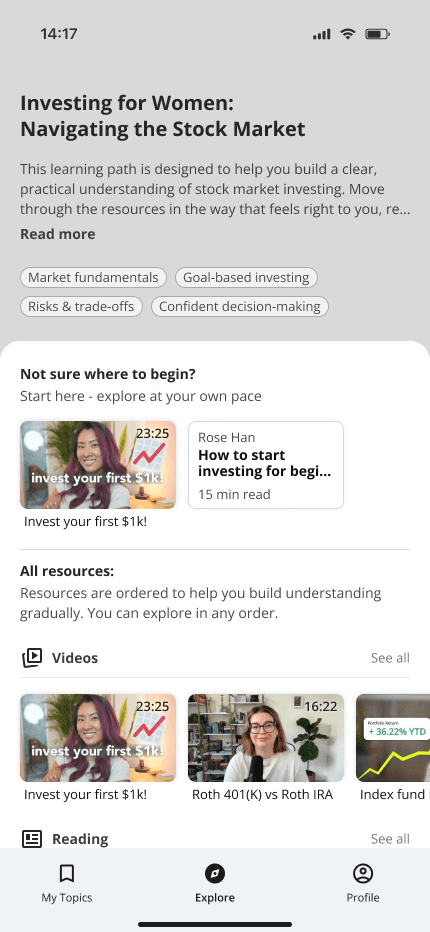
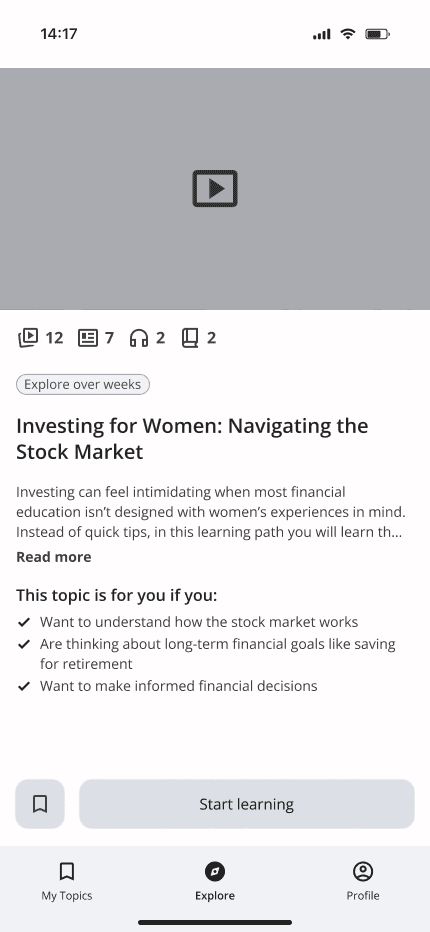
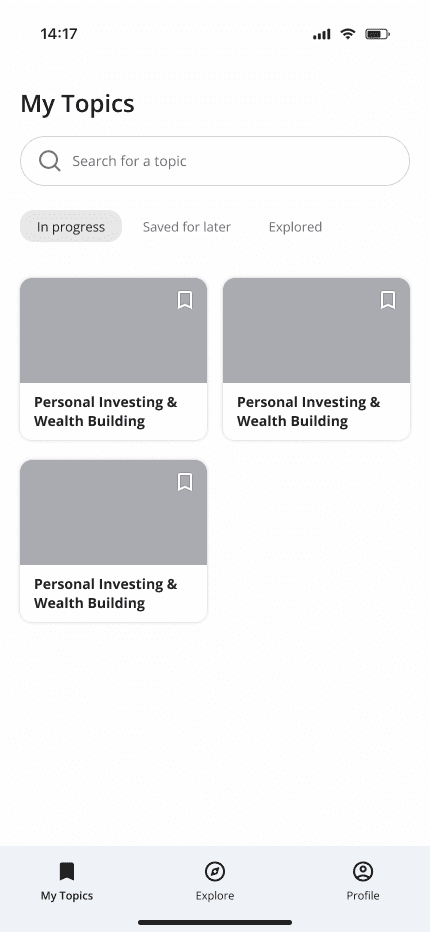
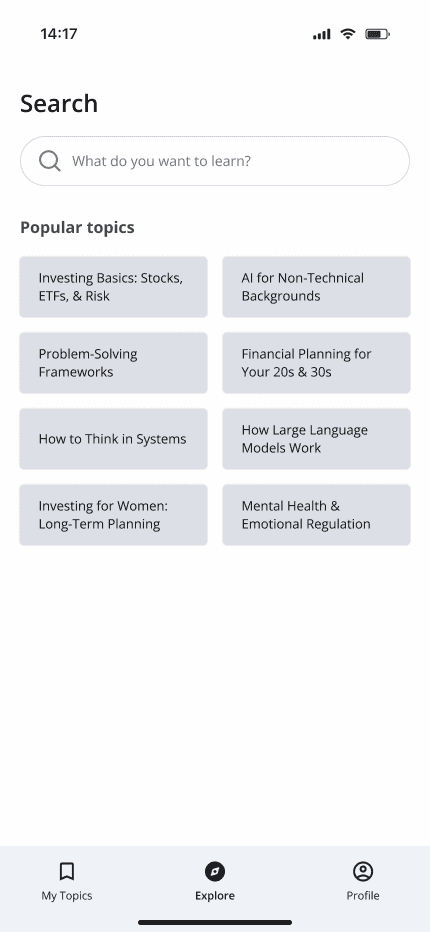
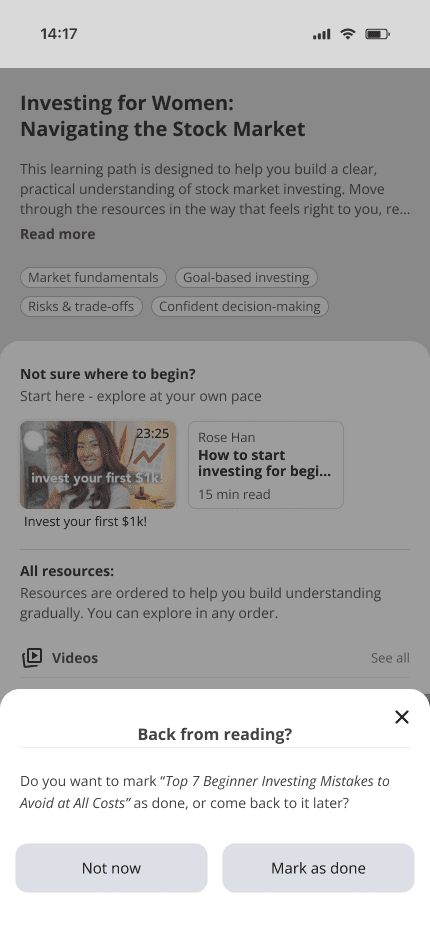
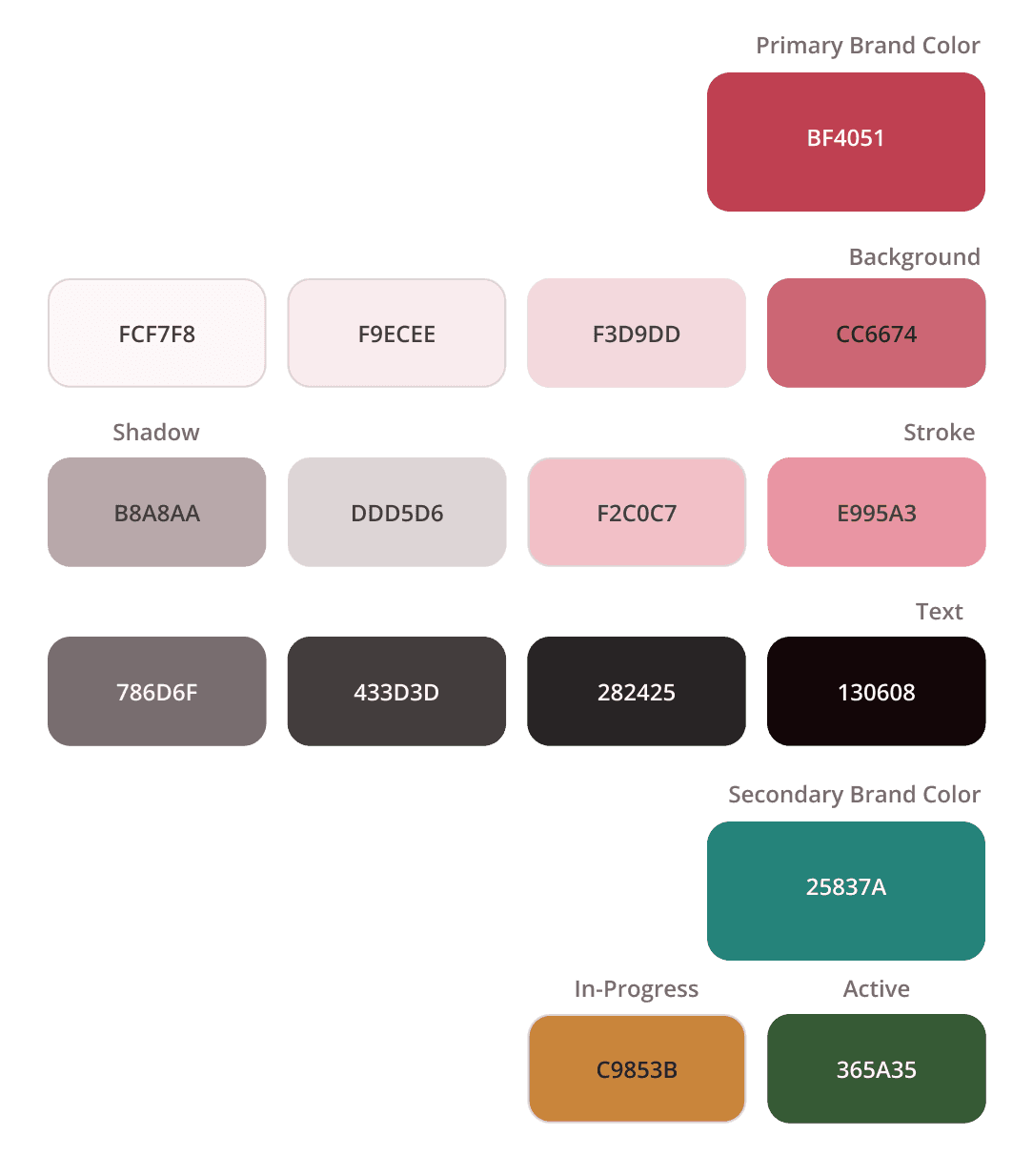
I paid particular attention to language and hierarchy, avoiding terms that implied obligation or completion, emphasizing low-pressure exploration. The brand style was designed to reflect curiosity, clarity, and simplicity.
TYPOGRAPHY
Open Sans, 24px Semi-Bold
Heading 1: Page Title
Open Sans, 20px Bold
Heading 2
Open Sans, 16px Bold
Heading 3
Open Sans, 14px Bold
Heading 4
Open Sans, 14px Regular
Body
Open Sans, 13px Regular
Label
Aa Bb Cc Dd Ee Ff Gg Hh Ii Jj Kk Ll Mm Nn Oo Pp Qq Rr Ss Tt Uu Vv Ww Xx Yy Zz
UI COLORS
LOGO
Testing for Clarity
I tested high-fidelity prototypes with three users to evaluate Trailhead's usability and observed how participants interpreted labels, navigated resources, and reacted to structure cues. Testing validated the overall concept, however it also revealed a gap: users wanted more explicit guidance on how different sub-topics fit together.
I refined the MVP by introducing a recommended learning flow organized by sub-topics. I grouped materials into conceptual sections arranged in a logical progression to help users understand prerequisites and not jump to advanced topics too early. These changes improved clarity while preserving flexibility, aligning closely with the original research insights around structure without pressure.