“I want to meet people, but I don’t want to message a stranger for two weeks just to maybe get coffee. I wish I could just see what’s happening now and join.”

TL;DR
Unveil
Client:
Team:
My role:
Timeline:
Unveil/ Jonelle Allen
Soumya J, Kelyn Z, Peter S
UI/UX Designer (Focus.UX Res)
100 hours
Scope:
Tools:
End-to-End Mobile MVP
Figma, FigJam, Miro, PS
Key methods:
User Interviews, Affinity Map, Persona, Wireframes, Usability Test, Prototype
For my client capstone, I partnered with Unveil, a startup rethinking how adults form real-world connections. Inspired by the founder’s experience as a newcomer to Canada, the opportunity was clear: many people moving to new cities want connection, but existing platforms either rely on endless swiping or require heavy planning—both of which rarely translate into meaningful offline experiences.
Unveil set out to change that. Instead of matching people first, we centered the experience around shared activities—making connection feel natural, low-pressure, and grounded in real-world context. Research validated that what people truly want isn’t more chatting, but clearer intent, small-group settings, visible safety signals, and minimal coordination before meeting.
The resulting product direction positions Unveil as an activity-first platform designed to reduce planning fatigue and increase follow-through. By prioritizing spontaneity, trust, and ease, the concept creates a more human way to meet—turning digital discovery into tangible, in-person connection. Within an 80-hour timeline, this vision was brought to life through refined high-fidelity wireframes and a clickable prototype for stakeholder validation.
CLICK ME
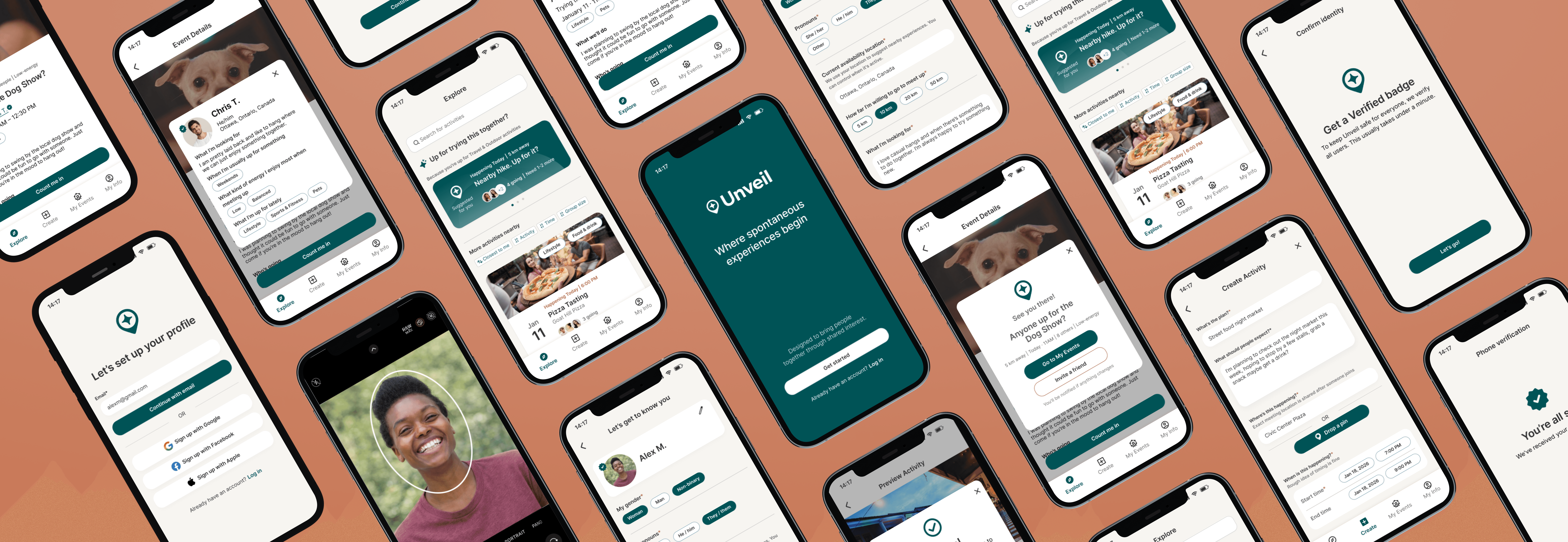
Bringing Unveil to Life
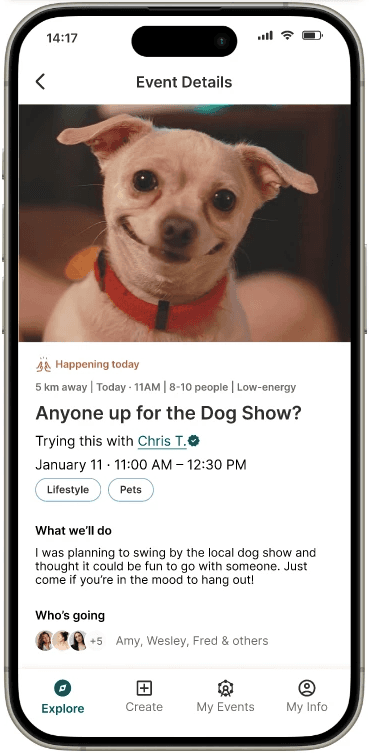
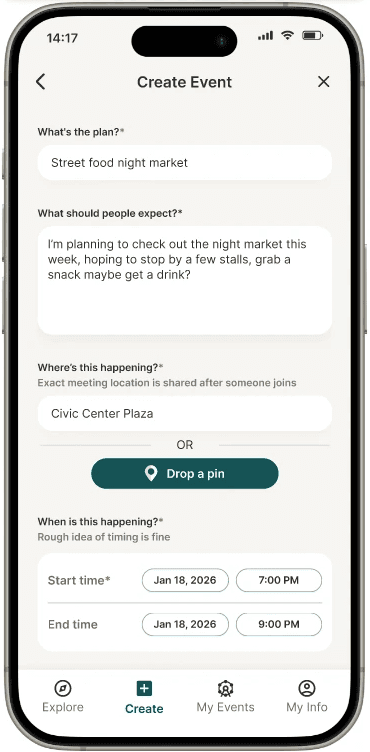
We built an interactive Figma prototype that demonstrated Unveil’s end-to-end experience including key flows such as onboarding preference selection, discovering activities, viewing host details, and joining or creating an activity.
Start safe, start personal
We've built onboarding to establish trust from the very first tap, so you can focus on showing up.
Verification badges for safety checks and preference setup help surface activities that feel right, while setting clear expectations for everyone involved.


Find Something You Want to Show Up for
Browse smart activity prompts to find something you truly want to experience.
If that's not your style, browse real, nearby activities people are already planning - no swiping, no endless chatting. See who's posting, what the vibe is, and all details upfront so you can confidently join.
Turn a Thought Into a Experience
Have an idea? Post it in seconds. Creating an activity is intentionally lightweight, making it easy to invite others.
Whether it's spontaneous or loosely planned, Unveil helps you put it out there and see who's in.

Client Testimonial
Identifying a Gap in Offline Connection
The client came to us with a clear intuition: despite the abundance of social platforms, adults new to a city still struggle to form meaningful offline connections.
Together, we explored how people-first social apps rely heavily on swiping and messaging, while event platforms demand too much commitment and feel impersonal. Both approaches often fail to translate into real-world meetups.
From this gap, we framed an early hypothesis that became the foundation for our research questions and early concept exploration.
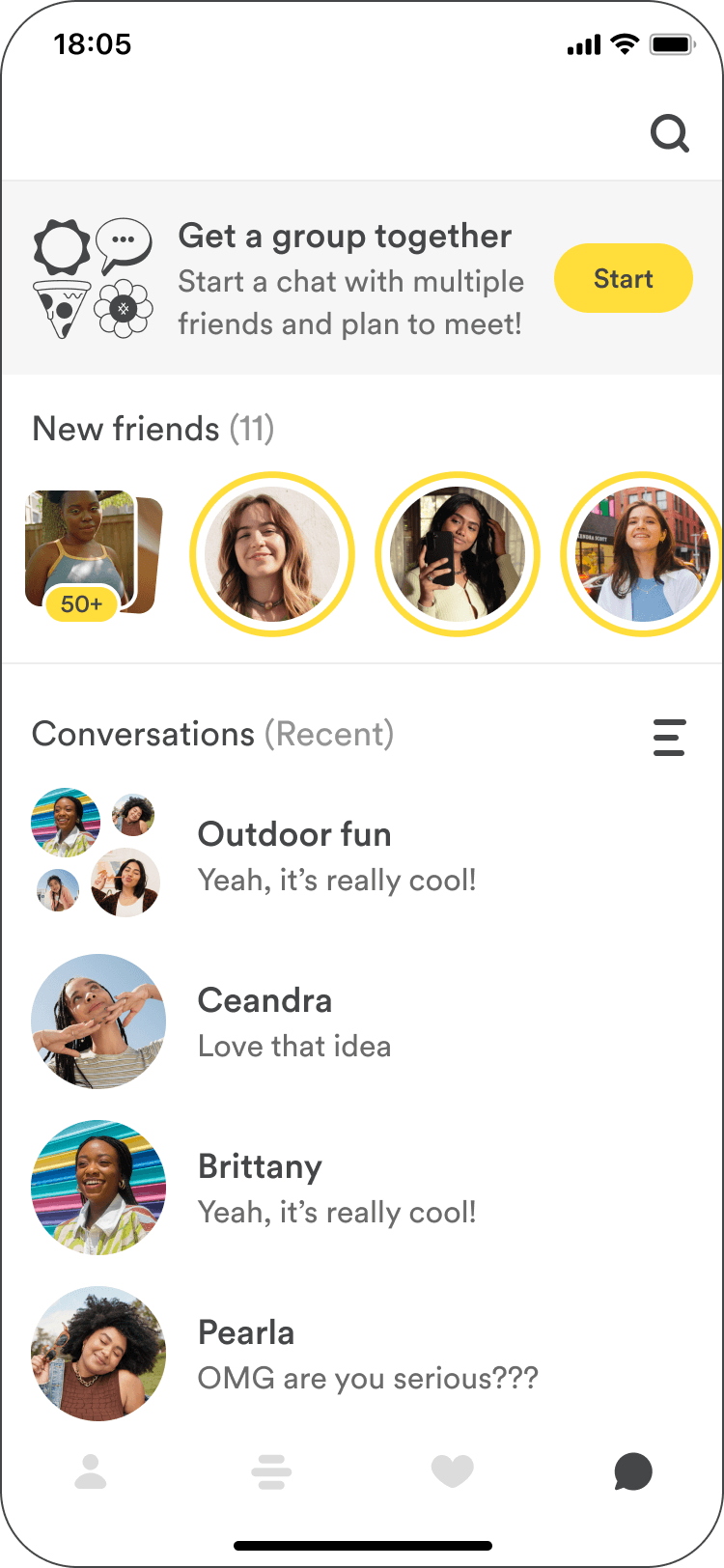
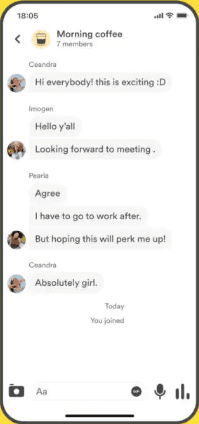





Hypothesis
Reversing the flow of social apps—starting with an activity and then matching people around it—could reduce pressure and make social connection feel more natural.
small controlled group = low pressure & effort
Social transparency & accountability can help with commitment
Safety features are more important and nuanced than a checklist
Curating visibility of events is important
Shared interests are key to reduce pressure & initiate connection with strangers

Open-ended planning with multiple people is draining…

Shared interests give me something to talk about
I'm an introvert, I wouldn't post something myself but I would show up if invited
1-on-1 meetups with strangers feel too intimate
Grounding the Concept in User Research
To validate and ground the idea in real user behavior, we began with secondary research and a review of popular social and event-based platforms to understand how they facilitate offline connection and where they fall short.
I co-led the UX research and conducted qualitative interviews with adults who had recently moved to a new city or were actively seeking social connection. Conversations focused heavily on safety concerns, planning fatigue, and the emotional barriers of meeting strangers, revealing gaps that existing tools were not addressing.
We synthesized interview findings through affinity mapping to uncover recurring patterns, needs, and pain points. While participants expressed a strong desire for connection, many felt existing platforms placed too much emphasis on online interaction and coordination, creating pressure before people even met.
Key Insight
Users have a strong aversion to meeting strangers one-on-one but feel safe and comfortable through clearly defined, public activities in small groups, preferring minimal pre-meetup communication and the ability to opt out easily.
These insights reframed safety not as a feature checklist, but as a feeling shaped by context, clarity, and social structure. As the next step, we developed user personas and defined the problem statement.


Problem Statement
Young professionals new to a city need a low-pressure, fast, and safe way to make offline connections because existing platforms prioritize heavy online coordination that often fails to translate into real-world meetups.
Designing Unveil
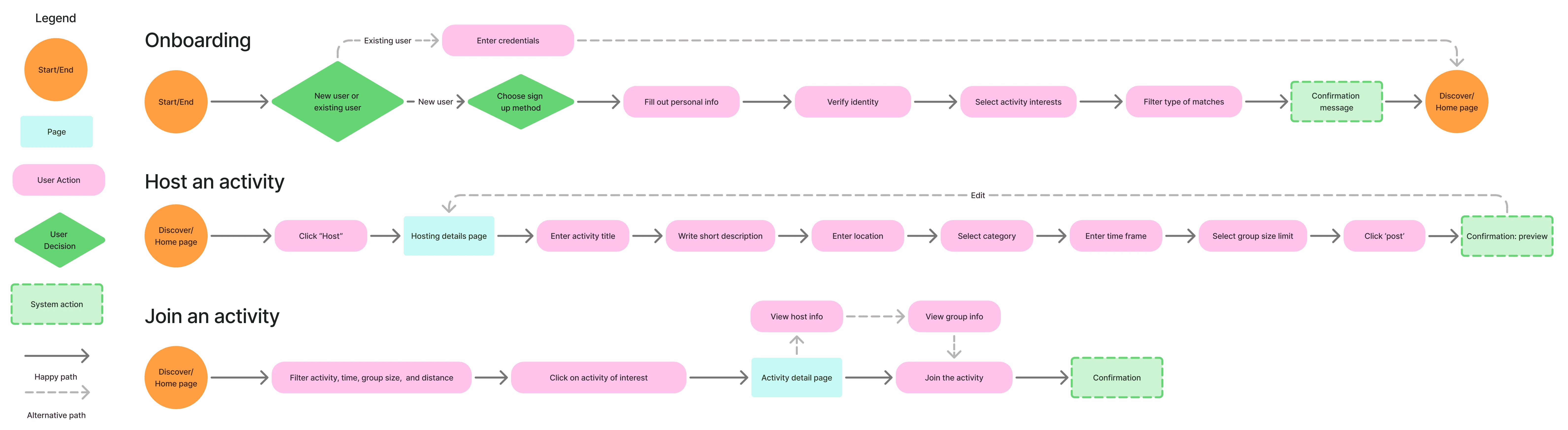
We translated research insights into clear design principles focused on easy discovery, quick opt-in, and reduced planning overhead. I helped map core user flows including onboarding with user preferences for enhanced suggestions, activity discovery, and creating and joining an activity.
Product direction
We defined Unveil as an activity-first social platform designed to make meeting new people feel natural, not forced. By centering real activities instead of profiles and endless planning, Unveil helps people connect around shared interests in the moment, without the friction of over-organizing.
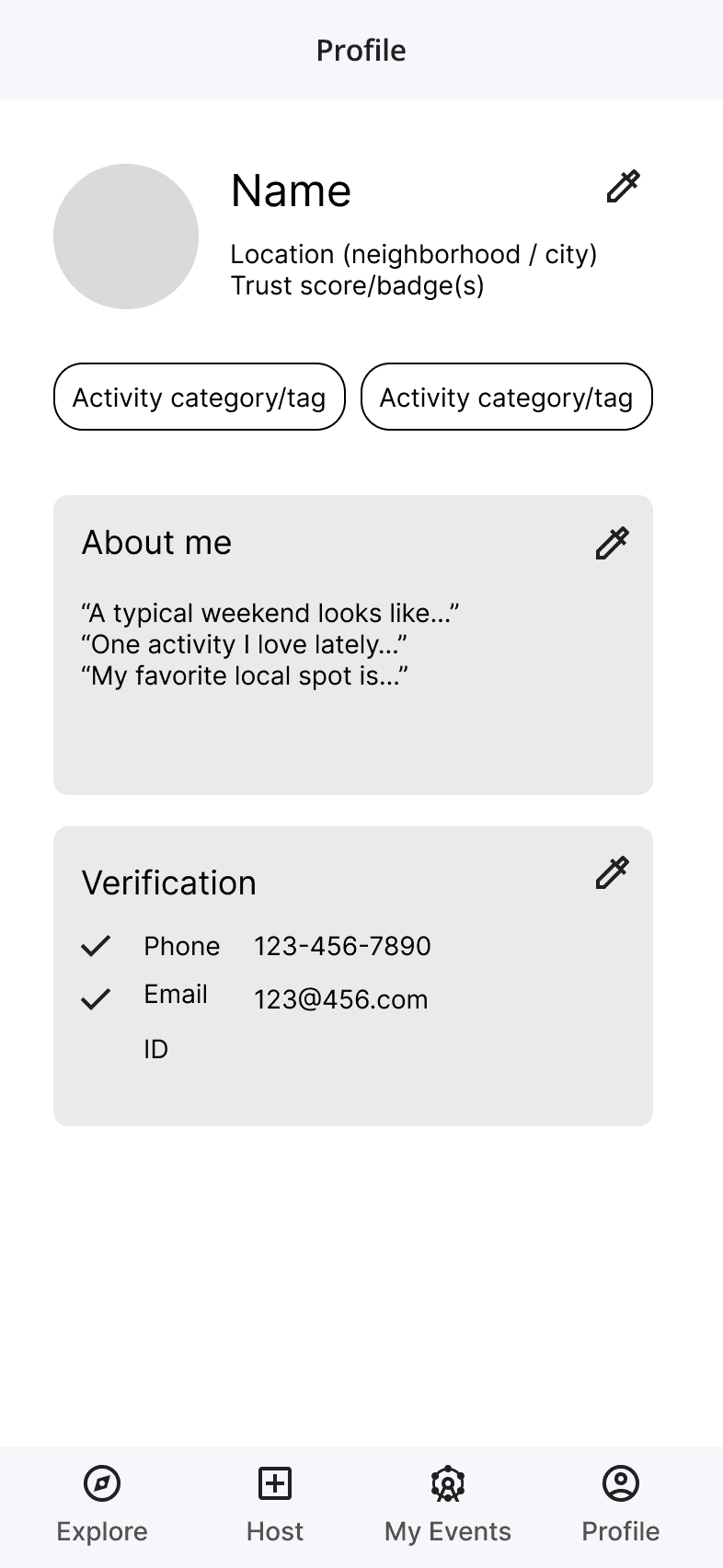
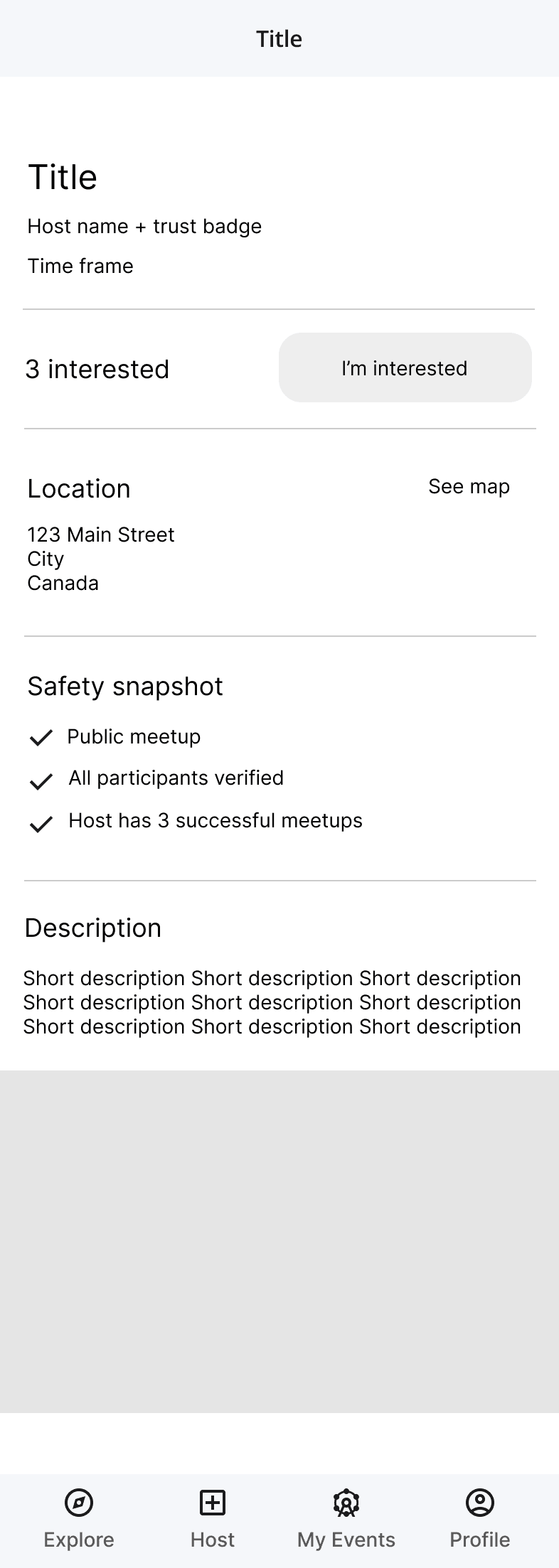
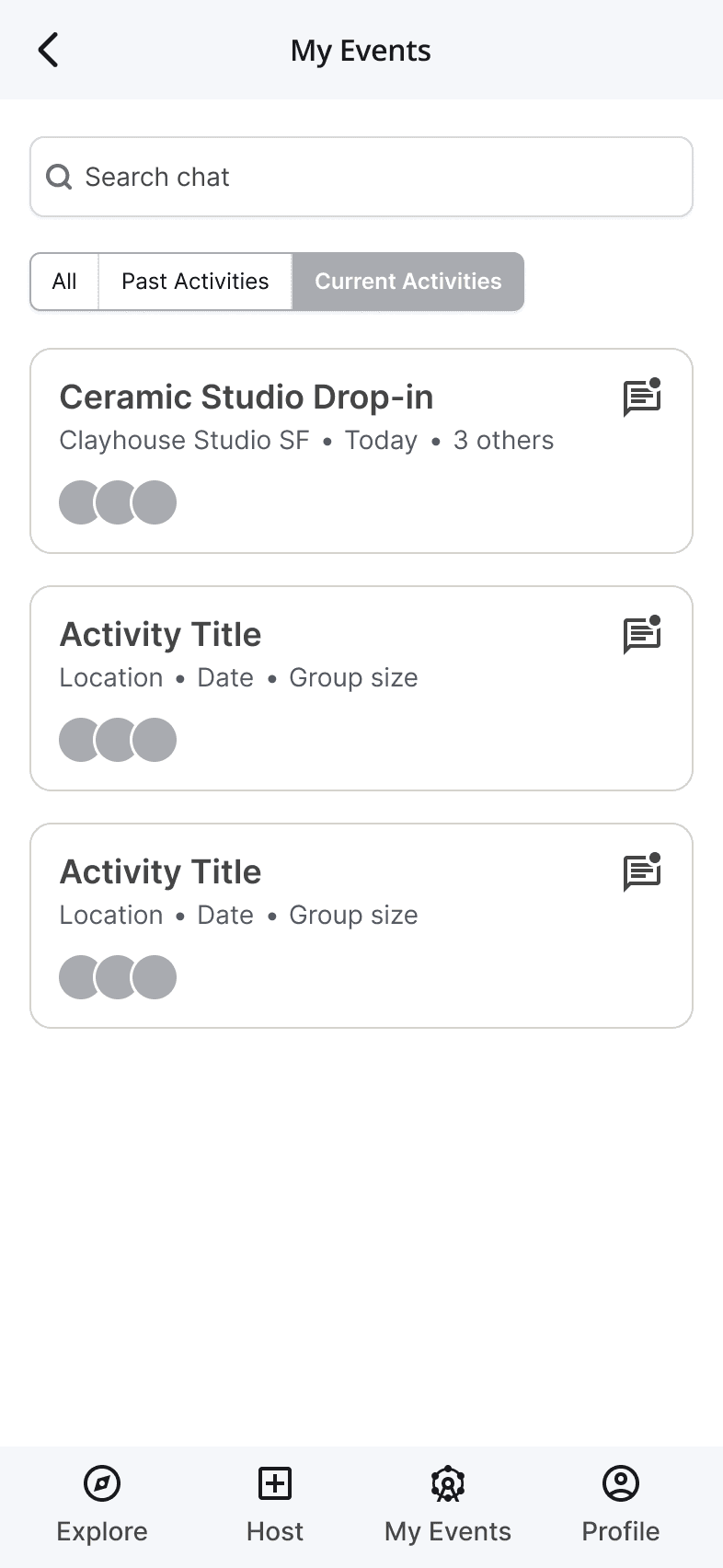
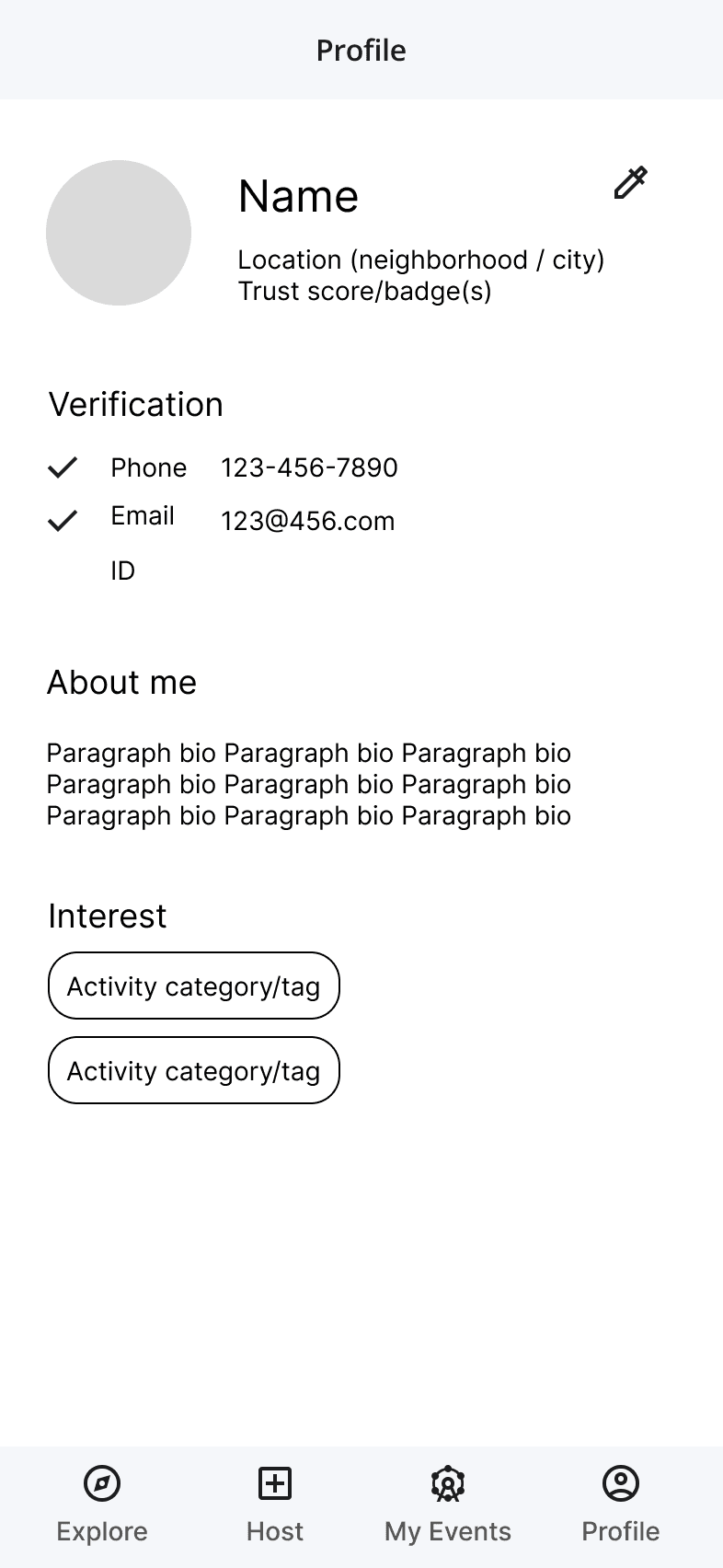
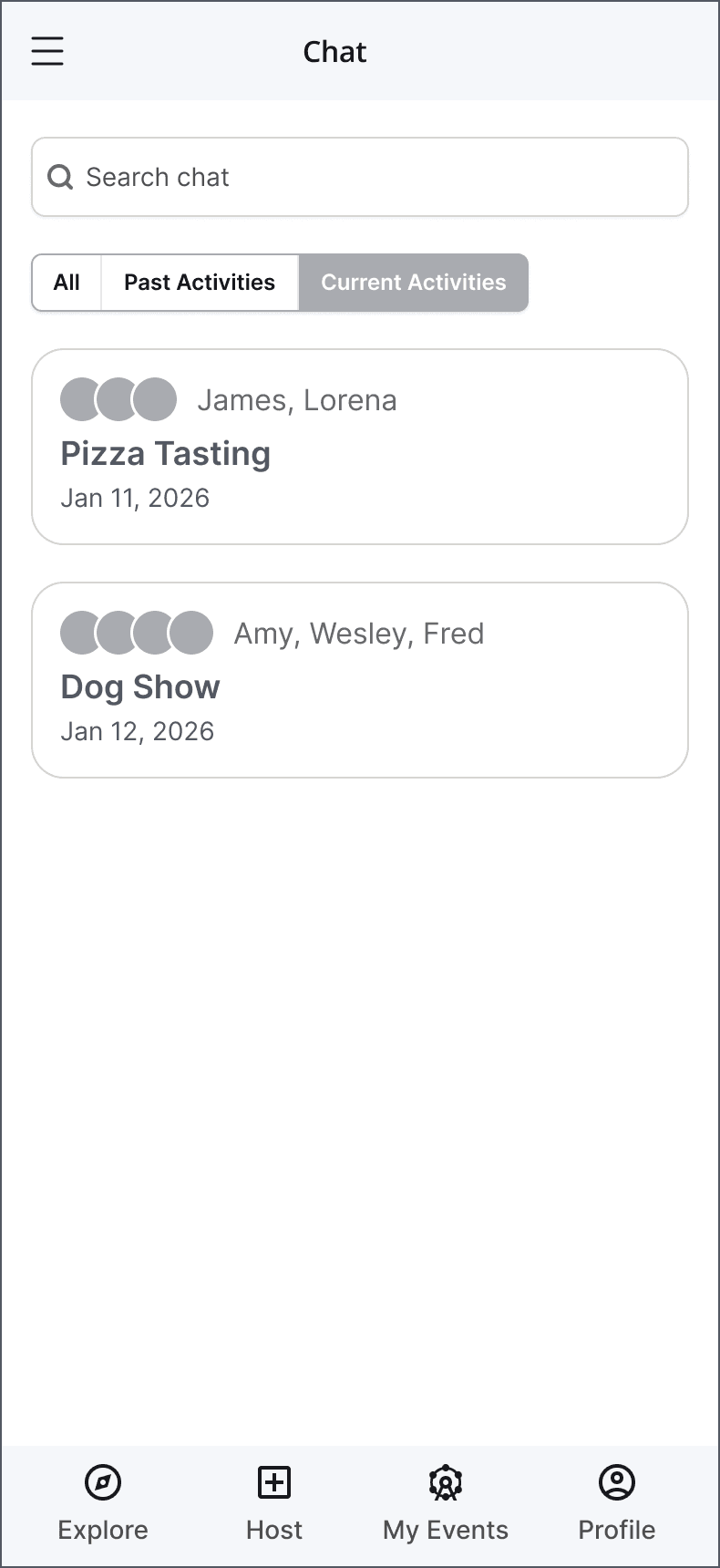
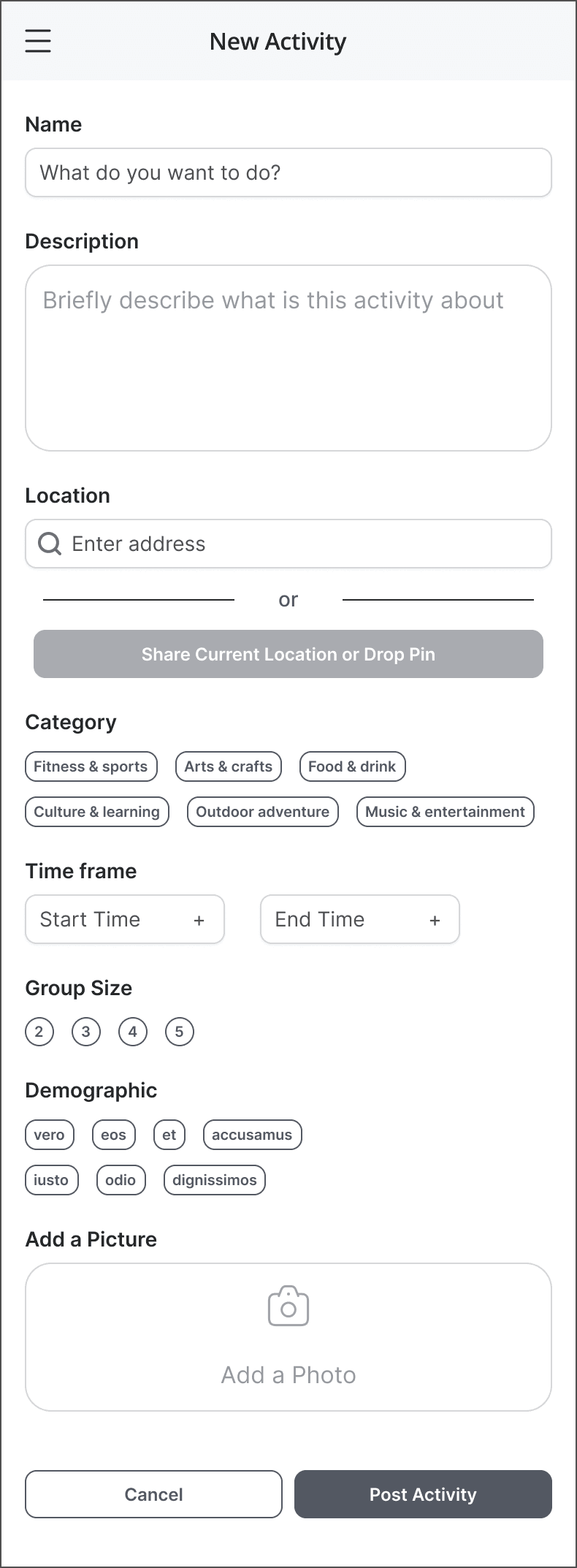
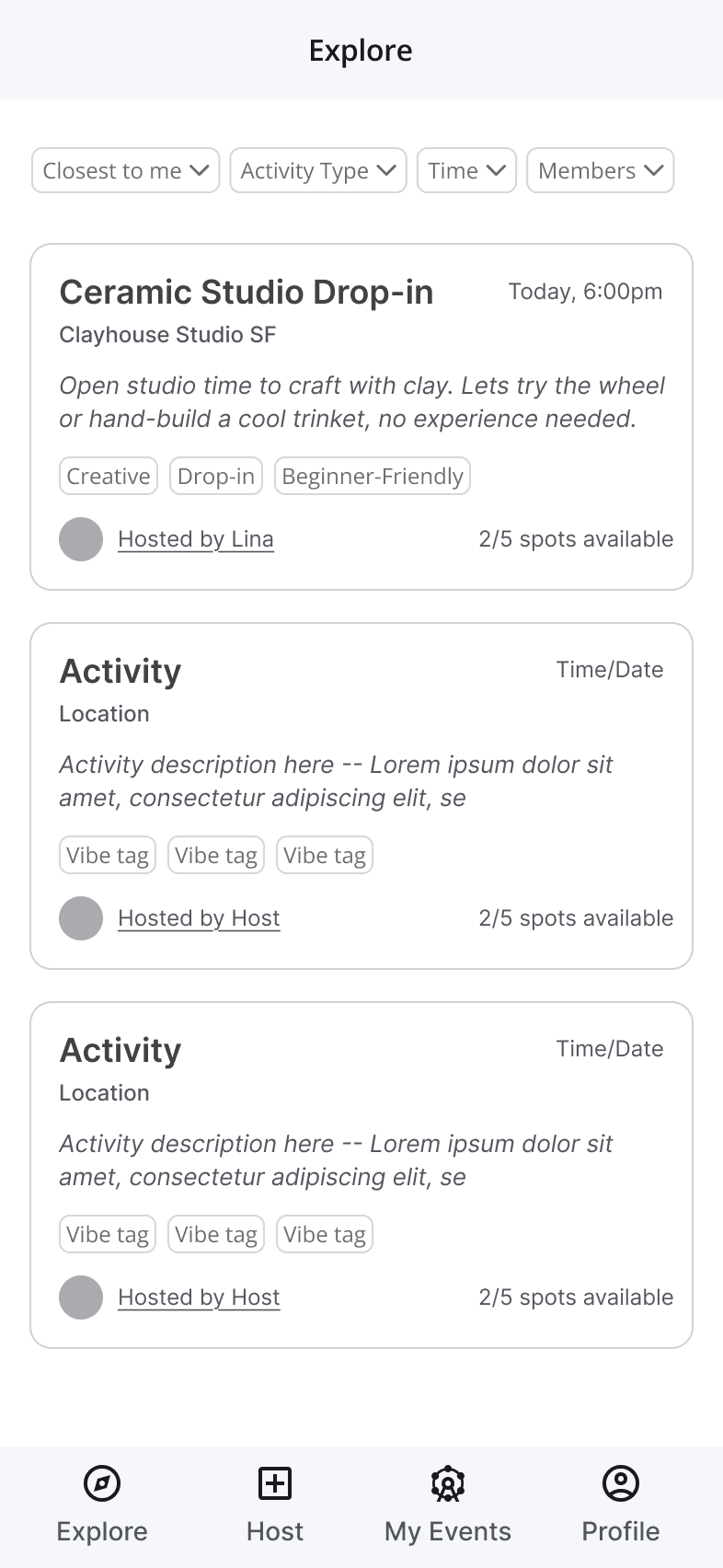
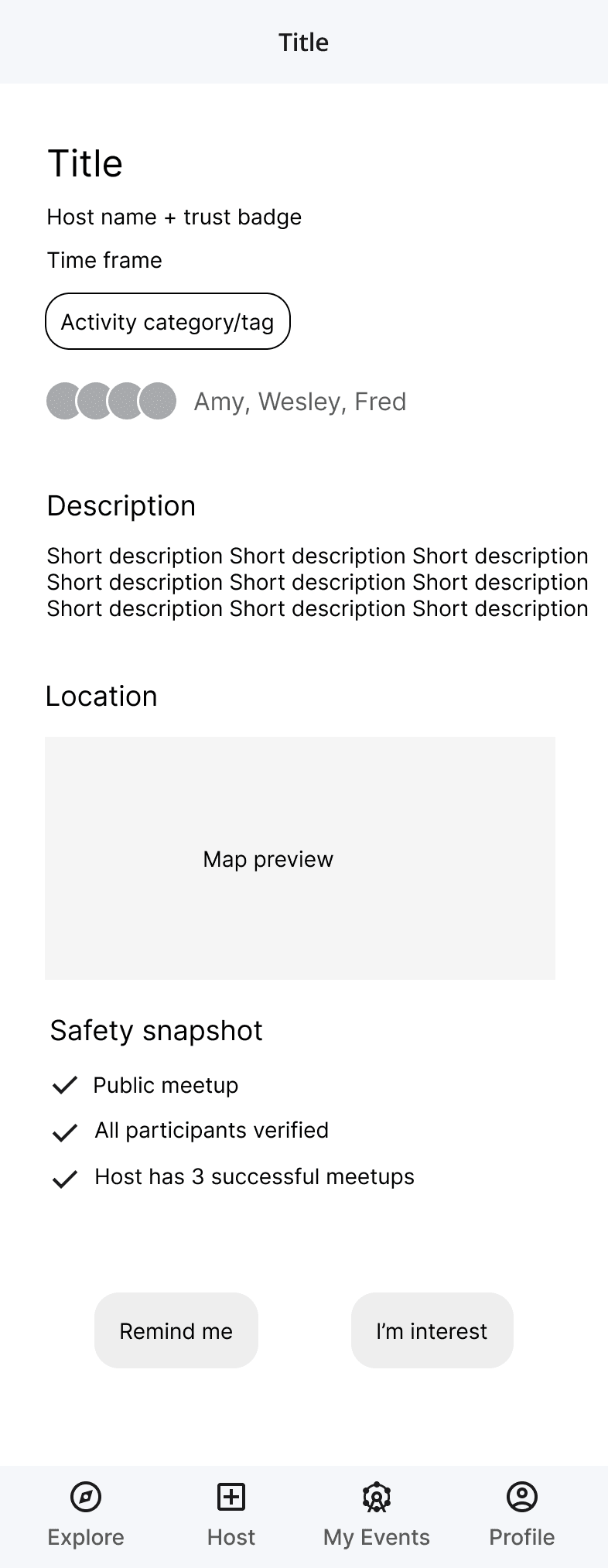
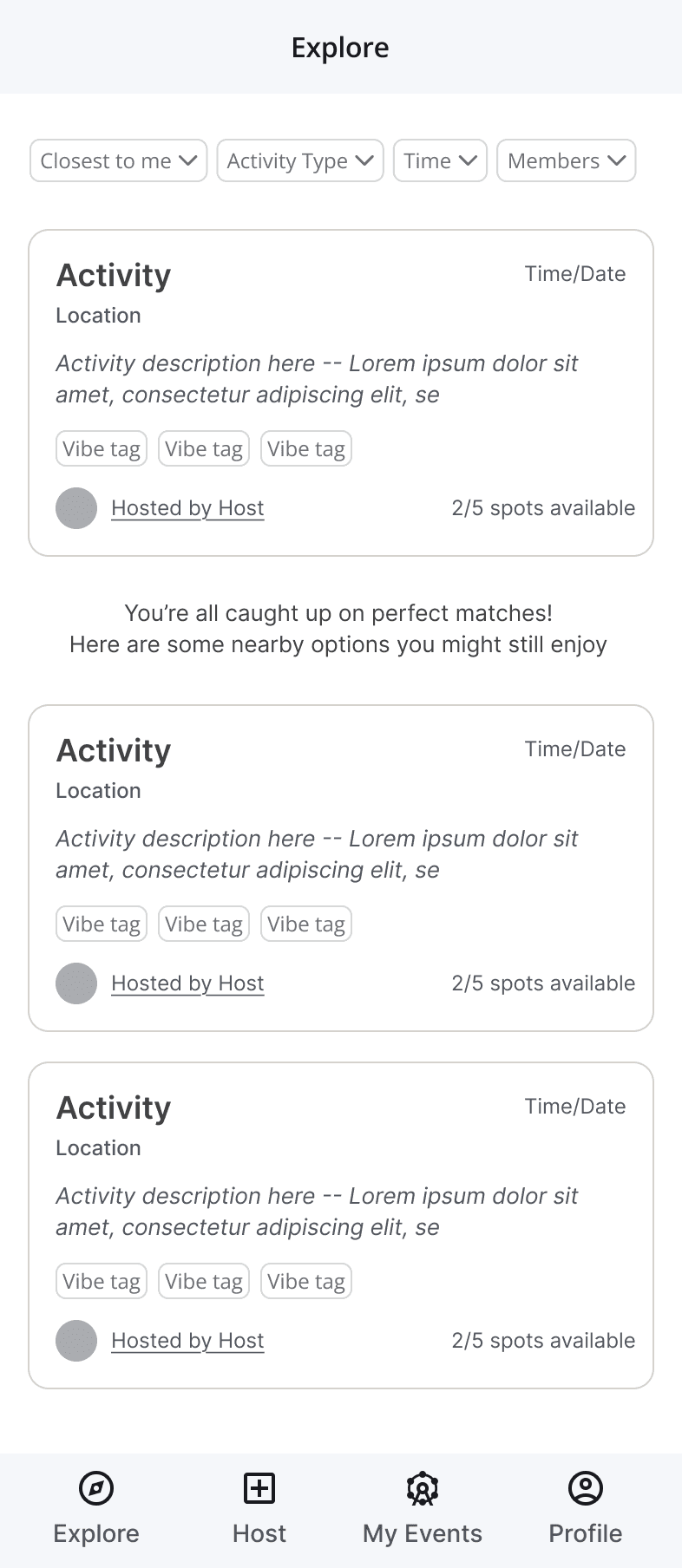
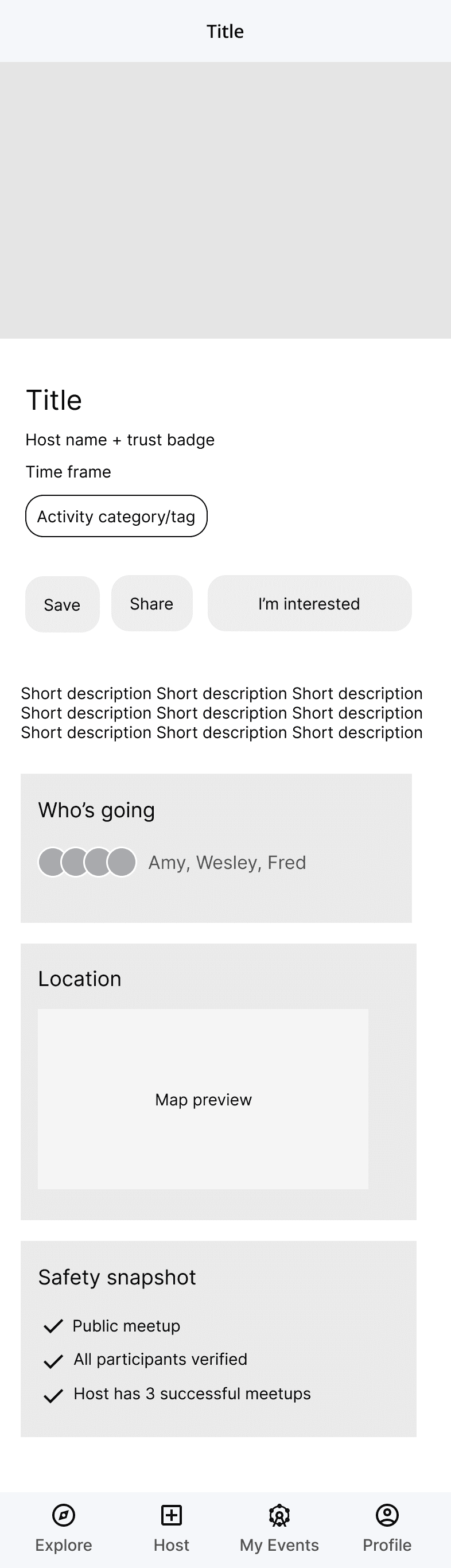
As we worked on wireframes, we paid particular attention to information hierarchy and language - using tone, labels, and structure to signal approachability, flexibility, and safety. The goal was to make participation feel inviting, optional, and easy to disengage from if needed.
TYPOGRAPHY
H1 — Inter 28 / Semibold
H2 — Inter 22 / Semibold
H3 — Inter 18 / Semibold
H4 — Inter 12 / Semibold
Body — 16 / Regular
Small — 14 / Regular
Label — 12 / Medium
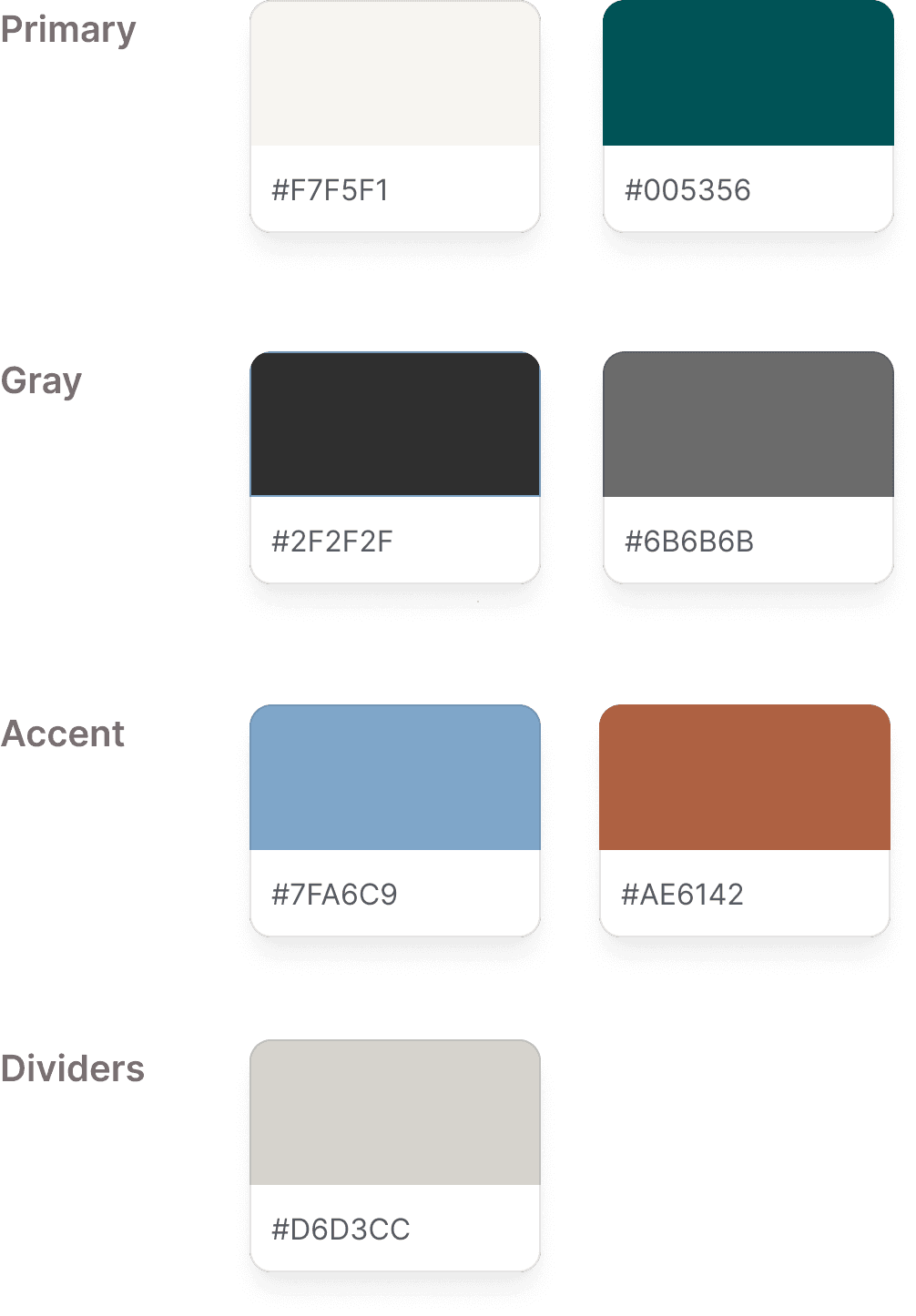
UI COLORS
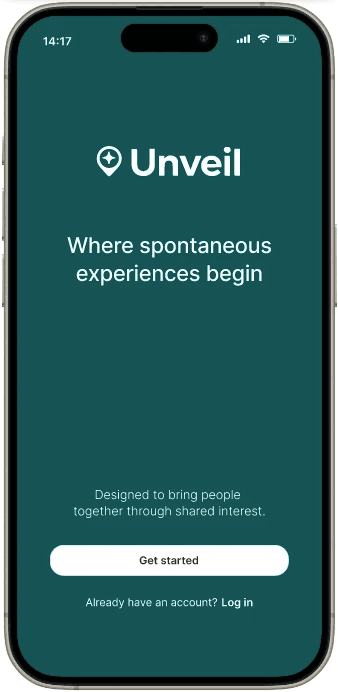
LOGO


Testing for Clarity
We tested high-fidelity wireframes with three users to evaluate Unveil's usability, comprehension, and emotional response. Observing how participants interpreted language, visuals, and interaction patterns helped us assess whether the experience truly felt low-pressure and trustworthy. Feedback led to tighter copy and clearer activity details.
One key refinement was prioritizing system-suggested activities, which helped users feel guided without forcing commitment. This balance reduced planning friction while still allowing personalization, reinforcing Unveil’s core promise of spontaneity without chaos.